Introduction In a horrifying incident that has shaken West Bengal and the entire country, a 24-year-old law college student in Kolkata was allegedly raped by an acquaintance, Monojit Mishra. Kolkata rape case 2025 has gained nationwide attention not only because of the brutality of the act but also due to the fact that the incident was recorded on camera. The accused allegedly used the footage to threaten and blackmail the victim, deepening the trauma. This article explores the details of the case, the legal implications, and the broader conversation it has sparked about women’s safety in India..

The Incident According to police reports, the survivor and the accused, Monojit Mishra, knew each other. Mishra, who reportedly had a history of harassing the survivor, allegedly invited her to a private location under false pretenses. There, he reportedly raped her and filmed the entire act without her consent. The accused then used the video to intimidate her into silence, threatening to leak it on social media if she dared to report the crime.
The victim, initially traumatized and fearful of public shaming, finally mustered the courage to approach the police after continuous harassment. Her testimony has been vital in the investigation.
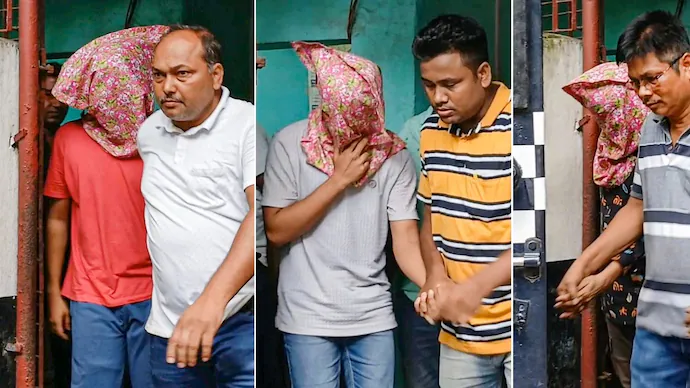
Police Action and Arrest Following her complaint, the Kolkata Police acted swiftly. A formal FIR was registered under sections pertaining to rape, criminal intimidation, and violation of privacy under the Indian Penal Code and the IT Act. Mishra was arrested within 48 hours of the complaint. During interrogation, it was revealed that he had indeed stored multiple copies of the video with an intention to circulate it online.
Authorities are now investigating whether there are other victims and whether Mishra was part of a larger network involved in cyber exploitation. His digital devices have been seized and sent for forensic analysis.
Public Reaction The case has ignited a massive public outcry. Women’s rights groups and student organizations across the state have organized rallies demanding fast-track trial and maximum punishment for the accused. Social media is abuzz with hashtags like #JusticeForKolkataSurvivor and #StopRapeCulture.
Many have drawn comparisons with previous cases like the Nirbhaya case in Delhi, underlining how such crimes persist despite increasing awareness and legislation.
Legal Perspective Legal experts believe this case qualifies as both rape and cybercrime. Under the Indian Penal Code (IPC), Section 376 pertains to rape, while Sections 354C (voyeurism), 506 (criminal intimidation), and relevant provisions of the IT Act for unauthorized filming and dissemination of explicit content are likely to be applied.
Stay updated with the latest national and international news—only on RealTimeVoice, your trusted source for real stories in real time.
Advocates argue that a watertight case can be built given the availability of video evidence and the swift police action. They also stress the importance of ensuring the video does not leak into public forums, to protect the dignity of the survivor.
Psychological Impact on the Survivor Counselors working with the survivor have highlighted the deep psychological trauma she is undergoing. Beyond the physical violation, the threat of public exposure and social stigma adds an additional layer of mental agony. Experts point out that in many such cases, victims often withdraw complaints due to fear of shaming and isolation.
Women’s rights activists are urging the government to extend psychological support and legal aid to the survivor, emphasizing the need to protect her identity and ensure she completes her law degree without fear or hindrance.
Systemic Issues and Loopholes This incident has once again brought to light the systemic issues in India’s approach to sexual violence. While laws have become stricter post-Nirbhaya, implementation and public attitude often fall short. Victims still face judgment, victim-blaming, and a lack of institutional support.
Moreover, the increasing misuse of digital platforms for cyber crimes like revenge porn, non-consensual filming, and blackmail point to a gap in both awareness and enforcement.
Calls for Reform Public figures, legal experts, and civil society organizations are calling for:
- Speedy trial through fast-track courts
- Stronger digital privacy laws
- Mandatory cyber crime awareness programs in colleges
- Enhanced mental health support for survivors
- Strict regulation of explicit content online
Some have also suggested stricter regulation on smartphone usage and monitoring applications that promote anonymous content sharing.
Role of Media While mainstream media has largely maintained sensitivity in covering the incident, the risk of sensationalism remains. Media watchdogs and press councils have advised restraint in sharing details that could reveal the identity of the survivor or compromise the investigation.
Social media platforms, on the other hand, have shown both support and irresponsibility. While many users demand justice, others have attempted to spread unverified rumors. Authorities have warned that sharing the explicit video, even unknowingly, is a punishable offense.
Conclusion The Kolkata rape case is a brutal reminder of the dual threats women face: physical violence and cyber exploitation. While the arrest of the accused brings a semblance of justice, the deeper wounds—both personal and societal—will take much longer to heal.
The case must not fade into obscurity like many others. It should instead serve as a turning point for more robust laws, better enforcement, stronger psychological support systems, and above all, a cultural shift in how society views consent, dignity, and justice.