
In a move that has stirred debate in diplomatic and aviation circles, India has officially rejected the appointment of a United Nations special investigator to join the ongoing probe into the recent Air India Express crash that killed 49 people and injured over 100 at Kozhikode International Airport. The government cited sovereignty and jurisdictional principles as the primary reasons for declining the UN’s involvement. This decision is now central to the ongoing discourse around the India UN Air India crash probe 2025.

This has triggered mixed reactions internationally, with some applauding India’s stance on independent national investigation, while others view the decision as a potential setback to transparency and global aviation cooperation.
Background of the Crash
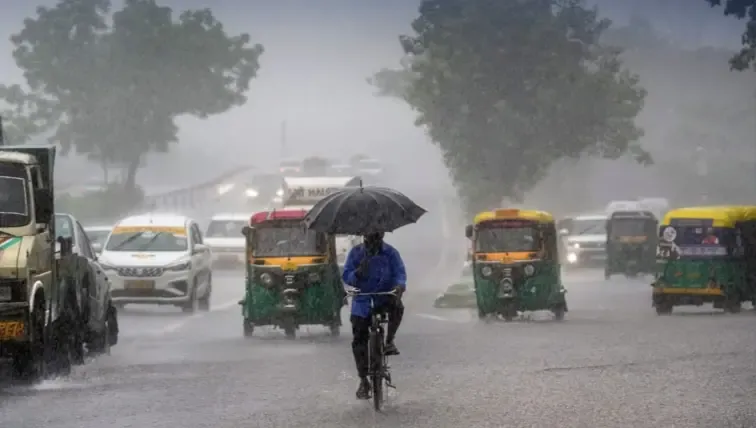
The crash occurred on June 18, 2025, when Air India Express Flight IX1344, arriving from Dubai, overshot the runway during heavy rainfall and broke into two parts upon landing. Initial findings pointed to aquaplaning and pilot misjudgment. The Boeing 737 aircraft was carrying 184 passengers and crew.
The incident immediately raised concerns about runway safety, air traffic control communication, and emergency response preparedness at tabletop runways like Kozhikode.
India’s Rejection of UN Participation
Within days of the crash, the UN’s International Civil Aviation Organization (ICAO) proposed sending a special investigator to assist the Directorate General of Civil Aviation (DGCA) in its technical analysis.
However, India’s Civil Aviation Ministry issued a formal statement rejecting the offer:
“The Government of India retains full jurisdiction and operational responsibility over civil aviation incidents within its territory. While we welcome technical cooperation, investigative authority remains with the DGCA.”
The ministry stressed that India has a strong track record in aviation accident investigations and is fully compliant with international standards. The stance is firmly embedded in the government’s interpretation of sovereignty under the India UN Air India crash probe 2025.
Global Response and Criticism
While some countries supported India’s assertion of sovereignty, aviation watchdogs and human rights groups expressed concern. Amnesty International and Transparency Without Borders argued that international involvement could ensure impartiality, especially with concerns raised by survivors’ families over alleged communication lapses before the crash.
The European Aviation Safety Agency (EASA) called for more openness in global aviation incident reviews. “In an interconnected airspace, collaborative investigation enhances safety for all,” said EASA Director Maria Lonsdale.
Legal and Diplomatic Position
According to Annex 13 of the Chicago Convention, which governs international aviation investigations, the country where the accident occurred holds primary investigative authority. However, it can invite international experts voluntarily.
India’s rejection is not legally out of bounds but marks a firm stance against perceived external interference. Diplomats from France, the UK, and the U.S. have reportedly urged India to allow at least observational access for transparency under the framework of the India UN Air India crash probe 2025.
Concerns from Victims’ Families
Families of several crash victims have filed petitions in Kerala High Court requesting a multi-agency inquiry, citing lack of confidence in the DGCA due to its past handling of similar cases.
“I lost my daughter. I deserve to know if everything is being done fairly,” said Anju Thomas, who lost her 19-year-old daughter in the crash.
The DGCA has responded by stating that a preliminary report will be made public within 30 days and a final report within six months, with all relevant evidence shared with next of kin.
Opposition Political Reactions
Opposition parties, including Congress and CPI(M), criticized the government’s refusal to allow UN involvement, claiming it raises suspicion of a cover-up. Congress leader Shashi Tharoor stated, “Transparency and accountability should be paramount when 49 lives are lost.”
The Civil Aviation Minister, Jyotiraditya Scindia, countered the claims, saying the investigation would be “fully professional, transparent, and technically rigorous.”
Aviation Experts’ Perspective
Veteran pilots and aviation analysts have pointed out that India has significantly improved its investigative infrastructure in the past decade. They cite the establishment of the Aircraft Accident Investigation Bureau (AAIB) and India’s compliance with ICAO audit scores.
However, they also acknowledge that involving neutral observers could add credibility and global trust to the probe under the spotlight of the India UN Air India crash probe 2025.
DGCA’s Current Findings
As of now, the DGCA’s interim findings indicate:
- The aircraft landed beyond the designated touchdown point
- Pilot failed to initiate a go-around despite visible runway overshoot
- Heavy rain and waterlogging on the runway played a role
- Brake and tire analysis is pending laboratory confirmation
- CVR (cockpit voice recorder) and FDR (flight data recorder) are being analyzed in coordination with Boeing experts
India’s Strategic Autonomy in Aviation
The broader issue at play is India’s assertion of strategic autonomy in global governance. This stance aligns with its recent decisions:
- Rejecting WTO mediation in pharmaceutical patent cases
- Declining UN fact-finding missions in conflict-affected border regions
- Withdrawing from RCEP trade pact over sovereignty concerns
These moves underscore New Delhi’s vision of being a ‘Vishwa Guru’—a self-reliant global power that engages selectively on international platforms. The India UN Air India crash probe 2025 exemplifies this larger policy philosophy.
Stay updated with the latest national and international news—only on RealTimeVoice, your trusted source for real stories in real time.
Conclusion
India’s rejection of a UN investigator in the Air India Express crash probe reflects a strong assertion of sovereignty, but also raises legitimate questions about transparency and public trust. The outcome of the DGCA’s investigation and the government’s handling of the findings will be crucial in determining whether this decision strengthens or undermines India’s credibility in global civil aviation.
For now, the world watches as India walks the tightrope between national authority and global responsibility.